By: Stephen J. Evanko, Jr., CPCU, LUTCF, AAI
Delaware Insurance Advisors
Liability insurance – you probably have it now and don’t give it a second thought. You see, it’s part of your car insurance policy – the coverage that protects you if you are found liable for causing injuries or damaging property. It’s also included with most home policies – just in case someone slips and falls at your house or Fido decides to become too aggressive and bite someone.
If you own a business, your business liability insurance protects you from things such as customer’s accidents on your property, your negligent activities or your faulty products (i.e. food poisoning).
How can this important protection so often be “overlooked”? Very simple… you have a life. Let’s face it, you’d rather plan your vacation than bring out and dust off the car, home and business insurance policies. You know they haven’t been looked at in years…and you’re probably thinking “if it isn’t broke, why fix it?”
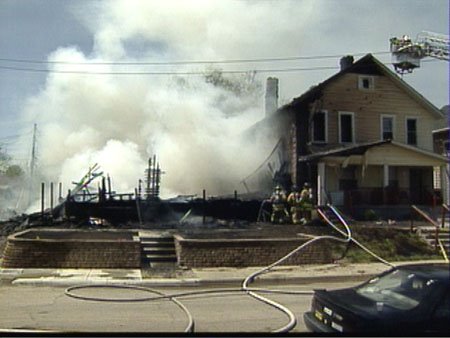
Here’s why you should pay close attention: everything you have earned could be lost because of one careless accident. What if you are briefly distracted and don’t allow enough distance between you and the car in front of you. Or, what if your employee fails to clean up a spill at your business?
Don’t take your protection and security for granted. Get those policies out and make sure your liability protection equals or exceeds your assets. Your assets (both personal and business) are those that you have earned, worked hard for or even inherited. So, why risk them?
The purpose of liability insurance is to protect your assets from people who want to take them away from you due to your negligence. You want to ensure that you and your family can maintain your lifestyle! Of course, there are always exceptions. Before making important decisions, be sure to work with the help of an experienced, credentialed and licensed insurance advisor.
Contact Stephen at 740-369-1040 or sevanko@colinsadv.com
Friday, August 24, 2007


Thursday, August 23, 2007
Track Down a Life Insurance Policy
Q - My Father died and we can't find his life insurance policies anywhere. My Mother died years ago and much paperwork had been misplaced. Any way to track down a life insurance policy?
A - Unfortunately, insurance policies are considered private transactions between an insured and the insurer. There is no single repository of life insurance policies that you can search. I'll touch on one service that could help you track down the policy if it's been purchased in the last 15 years or so, but you're really going to have to put on your CSI hat for this one. Most life insurance policies have premiums that need to be paid in order to keep the policy in force. Start any search by looking for the money trail.
First how old was the person who died? Did they die during their working years or after retirement?
Ernesto
A - Unfortunately, insurance policies are considered private transactions between an insured and the insurer. There is no single repository of life insurance policies that you can search. I'll touch on one service that could help you track down the policy if it's been purchased in the last 15 years or so, but you're really going to have to put on your CSI hat for this one. Most life insurance policies have premiums that need to be paid in order to keep the policy in force. Start any search by looking for the money trail.
First how old was the person who died? Did they die during their working years or after retirement?
For younger working people:
- Inquire at their place of work, perhaps they had a group policy or payroll deducted premiums, examine pay stubs and question deductions.
- Search check registers and bank statements for cancelled checks or direct withdrawals.
- Check with the Financial Advisors or the Property & Casualty agency that handled other investments or lines of business for the deceased; sometimes they keep notes of when they discuss life insurance issues with their insureds.
For older people, the insurance products sold 25 - 30 years ago were a little different than what is popular today. Older people would have been more likely to purchase permanent Whole Life(WL) policies that could stay in force until age 100, give or take a few years. There were a few flavors of WL sold back in the day, some they paid until a pre-determined age (usually 60) other types they paid premiums their entire life. Since WL builds a cash value, the insured had a option to:
- Pay premiums, keep policy in force.
- Skip premiums and the policy will fund itself from cash value until that runs out.
- Cancel policy and keep cash values.
Try to remember any discussion you've had regarding life insurance you had with the deceased. Ask their friends or neighbors if they ever had an insurance conversation with the deceased. This may give hints on where to look. Also:
- Check registers, SS or pension checks(for deductions) savings & investment accounts for withdraws.
- Check tax returns going back as far as possible (cashing a WL policy is a taxable event)
- Rack you brains for mention of a salesman or insurance company. Search orphaned policies on https://external-apps.naic.org/orphanedpolicy/ ; if the company merged or was purchased by another company, this link may help.
- Check unclaimed property office of the state. As a last resort, insurers pay death benefits to the state office if beneficiaries can't be found.
Ernesto
Thursday, August 16, 2007
Insurance for Rehab projects
Q - How do I find an insurance company to cover my home rehab projects?
A - You've got a few options; if we're talking residential houses (1-4 units) go to Foremost.com and do an agent search; Foremost will do vacant property in rehab up to two years. The agent who handles your P&C may have another company they use. Make sure any policy in endorsed for Vandalism (VMM) and Liability. If Liability is not available, you may be able to extend Liability from your Homeowners policy. Make sure the coverage is in the name of the person(s) or entity that purchased the policy.
If you're a real contractor (with insurance, bonding, licencing) then your P&C guy may have access to a builders risk program that allows vacant property under rehab.
Each program will have underwriting guidelines and restrictions you'll have to follow. Good Luck
A - You've got a few options; if we're talking residential houses (1-4 units) go to Foremost.com and do an agent search; Foremost will do vacant property in rehab up to two years. The agent who handles your P&C may have another company they use. Make sure any policy in endorsed for Vandalism (VMM) and Liability. If Liability is not available, you may be able to extend Liability from your Homeowners policy. Make sure the coverage is in the name of the person(s) or entity that purchased the policy.
If you're a real contractor (with insurance, bonding, licencing) then your P&C guy may have access to a builders risk program that allows vacant property under rehab.
Each program will have underwriting guidelines and restrictions you'll have to follow. Good Luck
Wednesday, August 1, 2007
Insuring old buildings
Q --Who insures old buildings? We have purchased a building constructed in the 1880s and all insurance companies seem to be terrified of the structure. Most won't insure anything over 75 years old.We are setting up a ceramics studio on the ground floor and will be living on the second and third floors. We did find one company that will charge us an outrageous amount, but we'd like to find something friendlier.
A -- You don't have a problem, you have TWO problems: AGE and USAGE.
A -- You don't have a problem, you have TWO problems: AGE and USAGE.
The first problem with older buildings is dealing with replacement cost. Most of them cannot be re-built, so either actual cash value or functional replacement is necessary. If a insurer only sells a replacement cost policy, you're ineligable.
The other AGE related problems can be dealt with by pointing out all updates done in the past 10-15 years:
- Electric - modern three strand wiring with circuit breakers all up to code
- Smoke & security alarms and other safety features inspected and up to code
- Updated plumbing
- Updated HVAC
- Updated Roof
- General good repair of entire building, surrounding area sidewalks
- Sprinklers ? This would be a plus.
Show that these issues have been addressed and an insurer will more likely think of the building as a rehab, not a piece of history.
The USAGE problem is a little trickier. Old buildings are high risk, ceramic studios (if MAKING ceramics is involved ie ovens, heat, flames; retail stores no problem) are high risk, mixed residential and commercial are high risk. Trying to get all three together AND getting good coverage for all will be difficult at best.
Try breaking down the liability (as a disclaimer, I am not an attorney and laws vary from place to place, please consult the appropriate legal council).
- Establish an LLC to own and manage the building
- Establish an LLC for the ceramics business then rent from the building LLC
- Rent the top two floors from the building LLC as residential space (maybe buy as a Condo?)
Now get insurance coverage:
- Commercial building general liability (GL) and property coverage for the first LLC
- Business GL with contents or business owners policy (BOP) for ceramics business
- Renters/Condo coverage with endorsement for improvements to cover personal property
Ideally you get all three from the same company; this may be difficult, but possible. The three coverages are more comprehensive than one combined policy, and easier to place. Not cheap, but the best way to get insurance.
Ernesto
Friday, July 27, 2007
Homeowners insurance: Covered or Not?
Q: Does Homeowners insurance cover ANYTHING? Seems all I hear is people getting denied coverage, what a rip-off.
A: Homeowners and property insurance commonly has exclusions. As "all-risk" it generally covers any UNEXPECTED OCCURRENCE as long as it's not excluded.
Let's see.. excluded items:
For property insurance including renters, vacant or 'standard market' property can be written on DP1 or Broad form coverage. This covers named perils:
A: Homeowners and property insurance commonly has exclusions. As "all-risk" it generally covers any UNEXPECTED OCCURRENCE as long as it's not excluded.
Let's see.. excluded items:
- Acts of War
- Flood
- Earth movement (earthquake (may be covered under an endorsement))
- Nuclear accidents
- Animals, birds or fish (Pets that is)
- Motor vehicles
- Aircraft except models or hobby aircraft
- Property of roomers unless related or added through endorsement
- Wear and tear
- Inherent vice or latent defect
- Smog, wet or dry rot
- Discharge of pollutants
- Settling or expansion of pavement walls or roof
- Damage caused by vermin, rodents or insects
For property insurance including renters, vacant or 'standard market' property can be written on DP1 or Broad form coverage. This covers named perils:
- Fire and lightning
- Wind Hail Aircraft
- Riot & Civil commotion
- Vehicle damage
- Volcanic eruption
- Explosion
- Smoke
- Vandalism MAY be covered with an endorsement but usually is excluded if property is vacant
- May be endorsed for loss of use/rent
DP-3 Special form for property listed above but generally not vacancies. May be endorsed for replacement cost. Includes named coverages of DP-1 and also includes:
- Vandalism
- Collapse
- Glass coverage
- FD service charges
- Trees and shrubs (for named perils)
- Falling objects
- Weight of Ice & Snow
- Water leakage
- Freezing of plumbing or explosion of steam and hot water systems
- Power surge
- Damage caused by burglars
- May be endorsed for liability and loss of use/rent
- Comprehensive policy covers all personal owned property; dwelling AND contents
- Covers personal liability both on and off premises.
- Covers personal property on and off premise
- Loss of use – payment if you cannot live in property
- Separate structures: garages, sheds, pole buildings fences, pools, any stand alone structure on property
- Covers Theft and mysterious disappearance
- Damage to property of others
- First aid to guests
- Typically endorsed for replacement cost
This is a fairly comprehensive list. Keep in mind that policies vary by state, company and type of property. To get a idea of what is covered under your policy, consult your agent or read the policy language.
Ernesto
Tuesday, July 17, 2007
10 Mistakes People Make With Their Life Insurance
(At the end of this article -- -- you can learn how to get a FREE report that will benefit you and your family.) To learn how… read on!
Are you guilty of these mistakes?
If you answer yes to one or more of these questions… we need to talk immediately!
Did you buy a life insurance policy…
1. From an inexperienced agent? Do not buy from someone new to this business. Do you really want to place your family’s future in the hands of someone licensed for only a short while?
2. Over the internet? One simple mistake could see your cash going to the wrong person, or even worse -- the government.
3. That’s the wrong kind? There are so many different types of insurance policies and coverages. Remember… you don’t need the same policy as your neighbor!
4. For the wrong amount? Life insurance is for the loved ones you leave behind. They must be protected!
5. That costs too much? Overpaying for life insurance only hurts your loved ones. A good agent will have many options available. Do not settle for someone who can only offer you a policy from one company!
6. And not understand the purpose for the policy? You will need a different type of policy for estate tax planning than for mortgage repayment.
7. Over five years ago? Things change – work with someone who will review your policy regularly (every couple of years). In the old days, we used to call this “service after the sale”.
8. Based on an emotional decision? Again, situations change. Maybe you don’t even need that particular policy anymore.
9. To save for retirement? In all but the rarest circumstances, this is not a practical idea.
10. From a company without a strong financial rating? Not all life insurance companies are created equal! The financial stability of the company is critical! What happens to your family when that company goes out of business and your policy is worthless?
Contact me at sevanko@delinsadv.com or call me at (740) 369-1040 and I’ll send you my FREE report “How To Protect Yourself And Your Family If You Die… What Everyone Must Know About Life Insurance!” Or… if you have questions, call me at 740-369-1040.
Insurance Guy with the Funny Tie - Stephen Evanco
©2007 Delaware Insurance Advisors LLC – Stephen Evanko
Friday, July 13, 2007
Life Insurance as an Investment
Life insurance, the ultimate family planning tool, should be a core element of almost every family's financial plan; a large infusion of cash just when your family needs it. Being a fan of life insurance and investing, I'm always skeptical of schemes that combine life insurance protection with savings, especially saving for retirement. Death and retirement seem like opposite ends of a pole, how can one help the other? How does spending help saving? I’ve also learned to look twice when dealing with financial sales people. Their commissions are steep and have to be paid by someone. So logically, it will be the investment product you buy.
There are thousands of life insurance companies in the US and in foreign companies that do business in the US. If you were to compile a list of all available policies, add in all policies issued over the past fifty years and include policies being developed today, you could have one monstrous database with tens of thousands of different life insurance plans. To simplify this discussion, I’ll focus on three major types of life insurance policies:
Term Life (TL): A policy issued for a fixed period of time with no cash value building within the policy. The death benefit is paid if the insured dies during the period of time the policy is in force. If the insured outlives the policy term, they receive nothing.
Whole Life (WL): A policy where the policy term lasts the entire life of insured or until some fixed age (say 100) where insured is guaranteed to be paid face value of policy. If they die it’s paid as a death benefit. If they live, it’s a return of cash value. Either is guaranteed as long as the policy premiums are paid. Paid premium invested in the policy is paid back at a predetermined rate of return; usually a very conservative 2-3%. The return is projected to the penny for the life of the policy and is written as a policy illustration.
The two previous plans have fixed benefits and fixed payments. The third plan gets a little more complicated:
Universal Life (UL) or Variable Universal Life(VUL) : The naming difference is due to the underlying investments. UL is based on some conservative guaranteed investment, similar to a savings account or a money market; your return is guaranteed to never be negative, but the return rate will fluctuate with market interest rates. VUL is similar but premium dollars are invested in a type of mutual fund called a subaccount. The subaccount could be any type of investment: money markets, bonds, stocks, and foreign stocks; any type of investment that is deemed suitable by the SEC and is available as a mutual fund. Your returns could be positive or negative based on the underlying investment and your principle is not guaranteed.
Both policies have a variable premium and variable benefits. This is the way it works:Your agent/broker will give you a range of payments from minimum to maximum. Let's say that your minimum is $30.00/month your maximum is $120.00/month and your midpoint payment is $65.00/month for an insurance policy with a death benefit of $50000. You select a payment; let's say $40.00/monthEvery time you make a payment that money will go into the account that pays interest or into a subaccount which is invested. Every month, your insurance company will withdraw the expense of insuring you for $50,000 from that account (I’ll talk more about the expense later). The balance will grow if principle with interest is greater than the insurance expense or if your subaccount has a positive return and the return outpaces the insurance cost.Here is the tricky part: Every year that goes by, you become older. Therefore the cost of insuring you goes up. In the first years that’s not a big difference, but after 10 or 20 years it will add up. So every year the company will withdraw a bigger amount of money from that account to keep you insured. Remember that the balance will grow with interest which may go up or down based on market rate, or in your subaccount depending of the rate of investment return. So the more you pay on the earlier years, the less you will have to pay in the later years. In some cases -if you’re funded well early- the insurance company will ask you to stop payments temporarily; the opposite is also true, if you funded very lightly or your subaccounts lose money, the insurance company will require you to raise your payments or you will lose the policy. Depending on your overall rate of return, you could end up with a substantial amount of money OR a life policy which needs extra money to stay in force OR a useless life policy which crashed and burned because you were unwilling or unable to pay additional premiums to keep the death benefit in force.
The sales pitches typically discuss the positive rate of return and the substantial amount of cash built within the policy. This money can grow tax deferred and can be borrowed tax free. Another golden nugget for your retirement; tax free money you can spend in your twilight years and life insurance that lasts a lifetime.
Sounds great in theory, but there are several sticking points in reality. For one thing, the expenses I talked about earlier. To pay agent commissions, show the insurance company a profit and pay investment fees on subaccounts each payment has certain charges subtracted:
· Sales load: Typically 6%
· Investment fees on subaccounts: Typically 2% per year; a drag in the investment returns.
· Cost of life insurance for face value of policy: Actuarial charge based on policyholders’ age at time of payment. Sex and other rating factors (smoker/non-smoker, health, occupational or lifestyle factors) are also factored in.
And depending on the insurer, you may not be getting a very good price on the basic insurance protection either. Most policies are quoted and sold at standard rating or will only offer preferred rating for policies with face values of above a certain amount, say $150K.
And while the borrowing scheme may seem like an easy enough way to turn investment gains into tax-free payouts, there are complications there too, the largest being that if the policy lapses after you've been borrowing money from it throughout retirement, you will pay taxes on the borrowed money as taxable income not capital gains like a mutual fund.
All in all, I don't think these policies are worth the trouble. That said, I suppose you could make a case for one if someone were already maxing out tax-advantaged alternatives like 401(k)s, IRAs and the like OR if a business was paying for it OR you have money coming out of every space in your house and can’t fit it anywhere else. I don't think it's a very compelling case.
But I suppose someone who really wanted to use (or sell) one of these policies could come up with a rational. But I doubt that even the biggest proponents of investing through life insurance would suggest that you do so before you had contributed all you can to all available tax-deferred investments. After all, it makes no sense to give up the lucrative up-front tax breaks that a 401(k) and traditional IRA offer (or the more straightforward tax-free withdrawals of a Roth IRA) in favor of an insurance strategy that's a lot more expensive and fraught with potential complications.
My advice for the 80% of Americans who don’t own an individual insurance policy? Buy a substantial Term policy; $500K or 5 to 10 times your annual income does nicely for most people. Then maximize your 401K, IRA or other investments you make. Have more money than you can invest tax deferred? Lots of investment opportunities in the world: tax advantaged mutual funds, real estate, business ventures the list goes on. Or just take a nice vacation with your cash. Just think twice before buying the ‘lifetime protection’ policy.
There are thousands of life insurance companies in the US and in foreign companies that do business in the US. If you were to compile a list of all available policies, add in all policies issued over the past fifty years and include policies being developed today, you could have one monstrous database with tens of thousands of different life insurance plans. To simplify this discussion, I’ll focus on three major types of life insurance policies:
Term Life (TL): A policy issued for a fixed period of time with no cash value building within the policy. The death benefit is paid if the insured dies during the period of time the policy is in force. If the insured outlives the policy term, they receive nothing.
Whole Life (WL): A policy where the policy term lasts the entire life of insured or until some fixed age (say 100) where insured is guaranteed to be paid face value of policy. If they die it’s paid as a death benefit. If they live, it’s a return of cash value. Either is guaranteed as long as the policy premiums are paid. Paid premium invested in the policy is paid back at a predetermined rate of return; usually a very conservative 2-3%. The return is projected to the penny for the life of the policy and is written as a policy illustration.
The two previous plans have fixed benefits and fixed payments. The third plan gets a little more complicated:
Universal Life (UL) or Variable Universal Life(VUL) : The naming difference is due to the underlying investments. UL is based on some conservative guaranteed investment, similar to a savings account or a money market; your return is guaranteed to never be negative, but the return rate will fluctuate with market interest rates. VUL is similar but premium dollars are invested in a type of mutual fund called a subaccount. The subaccount could be any type of investment: money markets, bonds, stocks, and foreign stocks; any type of investment that is deemed suitable by the SEC and is available as a mutual fund. Your returns could be positive or negative based on the underlying investment and your principle is not guaranteed.
Both policies have a variable premium and variable benefits. This is the way it works:Your agent/broker will give you a range of payments from minimum to maximum. Let's say that your minimum is $30.00/month your maximum is $120.00/month and your midpoint payment is $65.00/month for an insurance policy with a death benefit of $50000. You select a payment; let's say $40.00/monthEvery time you make a payment that money will go into the account that pays interest or into a subaccount which is invested. Every month, your insurance company will withdraw the expense of insuring you for $50,000 from that account (I’ll talk more about the expense later). The balance will grow if principle with interest is greater than the insurance expense or if your subaccount has a positive return and the return outpaces the insurance cost.Here is the tricky part: Every year that goes by, you become older. Therefore the cost of insuring you goes up. In the first years that’s not a big difference, but after 10 or 20 years it will add up. So every year the company will withdraw a bigger amount of money from that account to keep you insured. Remember that the balance will grow with interest which may go up or down based on market rate, or in your subaccount depending of the rate of investment return. So the more you pay on the earlier years, the less you will have to pay in the later years. In some cases -if you’re funded well early- the insurance company will ask you to stop payments temporarily; the opposite is also true, if you funded very lightly or your subaccounts lose money, the insurance company will require you to raise your payments or you will lose the policy. Depending on your overall rate of return, you could end up with a substantial amount of money OR a life policy which needs extra money to stay in force OR a useless life policy which crashed and burned because you were unwilling or unable to pay additional premiums to keep the death benefit in force.
The sales pitches typically discuss the positive rate of return and the substantial amount of cash built within the policy. This money can grow tax deferred and can be borrowed tax free. Another golden nugget for your retirement; tax free money you can spend in your twilight years and life insurance that lasts a lifetime.
Sounds great in theory, but there are several sticking points in reality. For one thing, the expenses I talked about earlier. To pay agent commissions, show the insurance company a profit and pay investment fees on subaccounts each payment has certain charges subtracted:
· Sales load: Typically 6%
· Investment fees on subaccounts: Typically 2% per year; a drag in the investment returns.
· Cost of life insurance for face value of policy: Actuarial charge based on policyholders’ age at time of payment. Sex and other rating factors (smoker/non-smoker, health, occupational or lifestyle factors) are also factored in.
And depending on the insurer, you may not be getting a very good price on the basic insurance protection either. Most policies are quoted and sold at standard rating or will only offer preferred rating for policies with face values of above a certain amount, say $150K.
And while the borrowing scheme may seem like an easy enough way to turn investment gains into tax-free payouts, there are complications there too, the largest being that if the policy lapses after you've been borrowing money from it throughout retirement, you will pay taxes on the borrowed money as taxable income not capital gains like a mutual fund.
All in all, I don't think these policies are worth the trouble. That said, I suppose you could make a case for one if someone were already maxing out tax-advantaged alternatives like 401(k)s, IRAs and the like OR if a business was paying for it OR you have money coming out of every space in your house and can’t fit it anywhere else. I don't think it's a very compelling case.
But I suppose someone who really wanted to use (or sell) one of these policies could come up with a rational. But I doubt that even the biggest proponents of investing through life insurance would suggest that you do so before you had contributed all you can to all available tax-deferred investments. After all, it makes no sense to give up the lucrative up-front tax breaks that a 401(k) and traditional IRA offer (or the more straightforward tax-free withdrawals of a Roth IRA) in favor of an insurance strategy that's a lot more expensive and fraught with potential complications.
My advice for the 80% of Americans who don’t own an individual insurance policy? Buy a substantial Term policy; $500K or 5 to 10 times your annual income does nicely for most people. Then maximize your 401K, IRA or other investments you make. Have more money than you can invest tax deferred? Lots of investment opportunities in the world: tax advantaged mutual funds, real estate, business ventures the list goes on. Or just take a nice vacation with your cash. Just think twice before buying the ‘lifetime protection’ policy.
Subscribe to:
Posts (Atom)